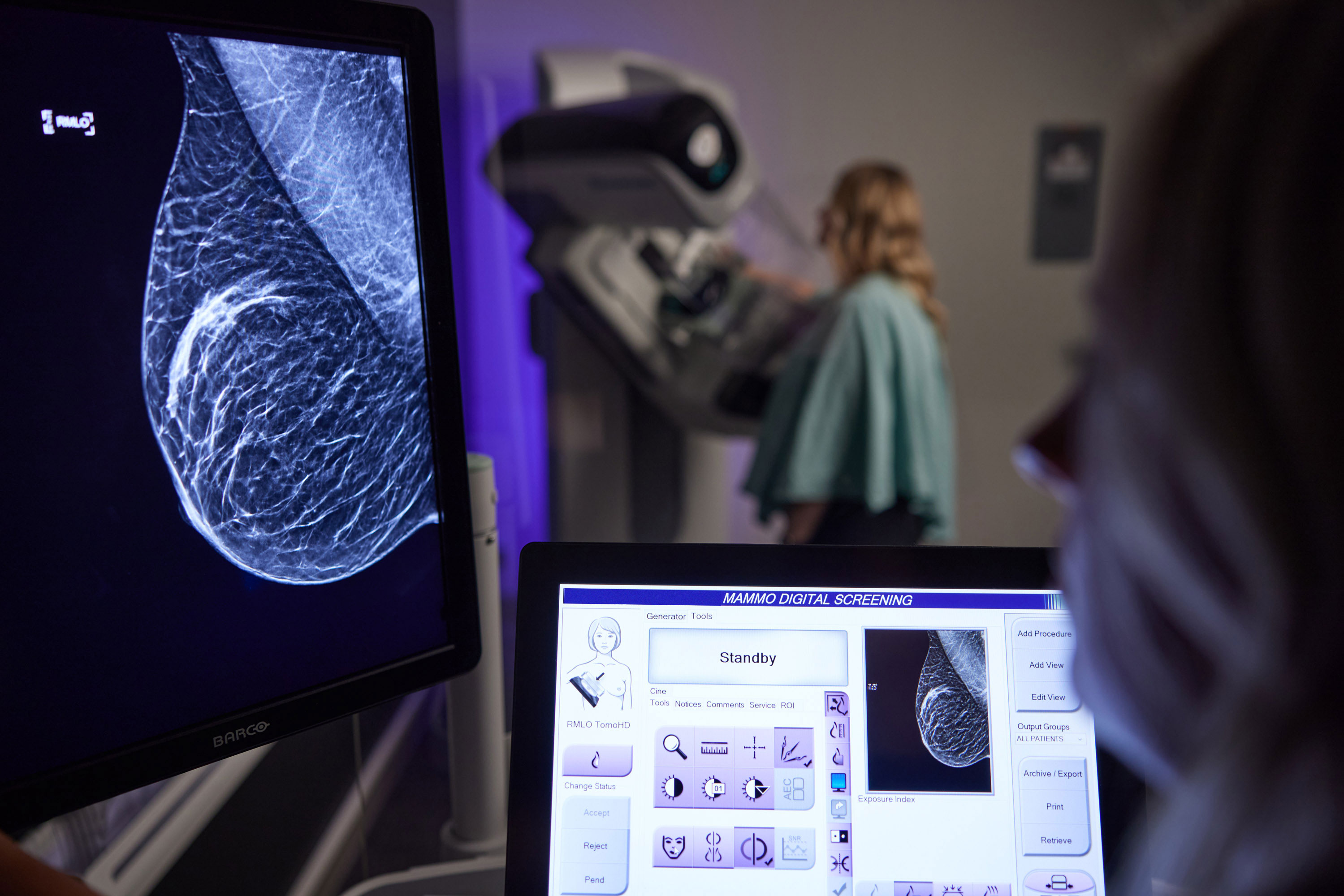
Women experience a wide range of health conditions that can affect quality of life at different stages. Many of these conditions, such as fibroids, endometriosis, and menopause-related changes, benefit from timely diagnosis and monitoring through imaging. At Iowa Radiology, we believe imaging is only the beginning. With expertise and advanced technology in women’s imaging, we deliver insights that help providers create tailored care plans and give patients a clearer understanding of their health.
Fibroids
Uterine fibroids are noncancerous growths that often develop during a woman’s reproductive years. While some cause no symptoms, others may lead to heavy bleeding, pelvic pain, or fertility challenges.
- Ultrasound is typically the first-line imaging tool for identifying fibroids.
- MRI may be used to determine size, number, and location, particularly when surgical or interventional treatment is being considered.
Imaging ensures that fibroids are accurately characterized so that treatment options can be tailored to each patient’s goals and needs.
Endometriosis
Endometriosis occurs when tissue similar to the uterine lining grows outside the uterus, causing pain and, in some cases, infertility. Because symptoms often overlap with other conditions, imaging is an important part of evaluation.
- Ultrasound can help detect ovarian endometriomas (a type of cyst associated with endometriosis).
- MRI provides a detailed view of pelvic anatomy and can be especially valuable for surgical planning.
Early, accurate imaging helps patients avoid delays in diagnosis and begin treatment sooner.
Pelvic Congestion Syndrome
Pelvic congestion syndrome is caused by varicose veins in the pelvic region and can lead to chronic pelvic pain. Diagnosis can be challenging without imaging.
- Ultrasound may show abnormal veins in the pelvis.
- CT or MRI can provide additional detail.
Imaging not only identifies the cause of pain but also helps guide potential interventional treatments.
Menopause and Low Estrogen
As women enter menopause, declining estrogen levels can affect bone and cardiovascular health. Imaging plays a role in monitoring these changes:
- DEXA scans measure bone density and assess osteoporosis risk.
- Cardiac imaging may be recommended if risk factors for heart disease are present.
By catching issues early, imaging helps providers recommend preventive steps and reduce long-term complications.
The Iowa Radiology Difference
- Subspecialized Expertise. Radiologists focused on women’s imaging bring deeper insight into conditions unique to women.
- Advanced Technology. Ultrasound, MRI, CT, and DEXA scanning provide a complete picture of women’s health.
- Collaborative Care: Our imaging results are shared directly with providers to guide treatment and follow-up.
- Patient-Centered Approach. We strive to make exams comfortable, explain results clearly, and reduce uncertainty.
Supporting Women Every Step of the Way
Women’s health is about more than identifying a condition–it’s about understanding the bigger picture and making confident choices about care. At Iowa Radiology, we deliver insights that support women throughout their health journey, from diagnosis to long-term wellness.